24. September 2026
How to Babyproof Your Kitchen: A Practical Checklist for Parents
The day your baby starts crawling, the kitchen changes. Cupboards become treasure chests, the oven door becomes a handle to pull on, and the fridge becomes the most exciting box in the house. You cannot make a kitchen completely childproof, but a few changes make the everyday hazards much harder to reach.
Work through this list once, then check it again every few months, because what your child can reach changes quickly.
1. Get down to their height
Kneel on the kitchen floor and look around. Anything you can reach from there, a crawling baby can reach too: low cupboards, bin lids, dangling cables, tea towels hanging from the oven door, and anything stored under the sink.
2. Move the dangerous things up and out of reach
- Cleaning products, dishwasher tablets and laundry capsules belong in a high cupboard, ideally one that locks, never under the sink.
- Medicines and vitamins should be stored high up and out of sight, even the ones in child-resistant bottles.
- Knives, scissors and glass go in a drawer or cupboard your child cannot open.
- Plastic bags and cling film should be kept away from little hands.
3. Add locks to the doors they will try first
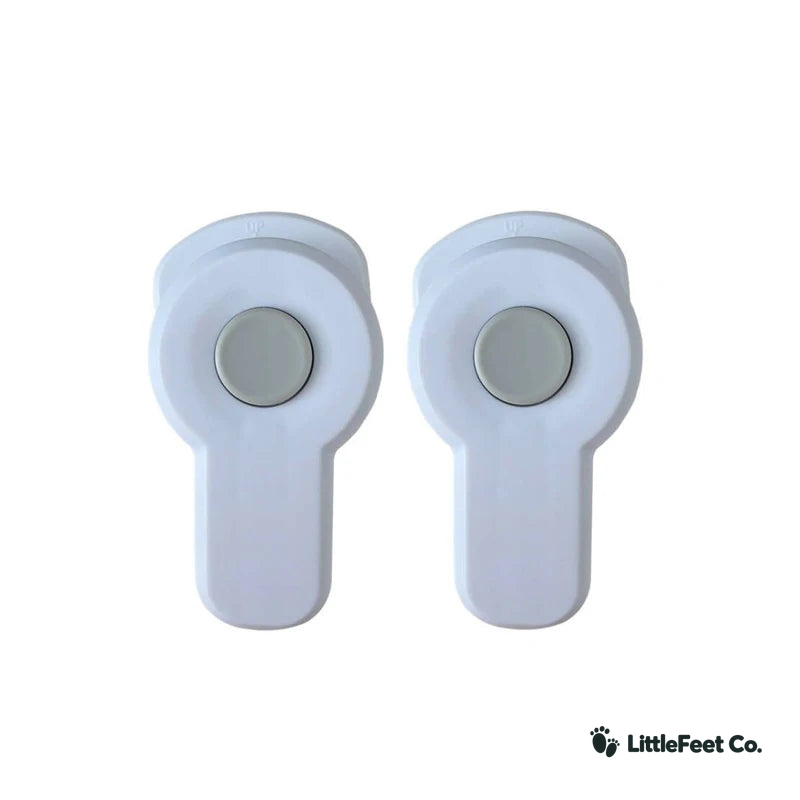
Low cupboards, the fridge and the oven are usually first on a toddler's list. Adhesive locks add an extra step before a door opens, without drilling holes in your units.
- Kitchen appliance locks for oven doors, microwaves and cupboards. Always check the heat limits and surface compatibility before fitting one to an oven.
- A fridge and freezer lock to stop the fridge becoming a self-service snack bar.
No lock is childproof in every situation. Think of them as a delay, not a guarantee, and keep supervising.
4. Make the hob and hot drinks less reachable
- Cook on the back rings where you can, and turn pan handles inwards.
- Put hot drinks well back from the edge of the worktop and table, and never hold a hot drink while holding your child.
- Keep kettle and appliance cables coiled back so they cannot be pulled.
5. Soften sharp corners
Kitchen tables, islands and breakfast bars often sit at exactly the height of a toddler's head. Clear corner and edge protectors add a cushioning layer while keeping your furniture visible. Measure the corner first so you pick the right shape.
6. Think about the floor
- Wipe up spills straight away, especially on tiles.
- Keep pet food and water bowls out of the walkway, or feed pets when your child is elsewhere.
- Use a safety gate if you want the kitchen to be a no-go zone while you cook.
7. Give them something to do instead
Toddlers want to copy you. A drawer of their own with plastic tubs and wooden spoons, or a wooden play food set, gives them a kitchen job that does not involve the oven door.
Quick kitchen checklist
- Cleaning products and medicines stored high and locked
- Locks on low cupboards, fridge and oven
- Pan handles turned in; hot drinks pushed back
- Cables coiled away from the edge
- Sharp corners covered
- Floor clear of spills and pet bowls
- A safe “kitchen job” for your toddler
Babyproofing products help, but nothing replaces an adult in the room. If you are ever worried that your child has swallowed something harmful, call NHS 111, or 999 in an emergency.